

The conference will include keynote talks by distinguished speakers from industry and academia. The speakers and the titles of their talks are shown below.
Dr. Belgacem Haba
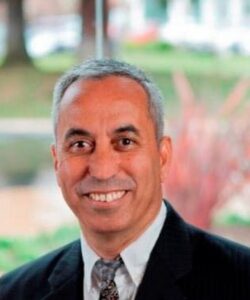
Biography:
Dr. Haba earned his Bachelor’s degree in physics from the University of Bab-Ezzouar, Algeria, in 1980. He then pursued advanced studies at Stanford University, California, obtaining two master’s degrees in applied physics and materials science, followed by a Ph.D. in materials science and engineering in 1988, focusing on solar energy. Early in his career, from 1988 to 1996, Dr. Haba conducted research at NEC Central Research Laboratories in Tokyo, Japan, and IBM Watson Research Center in New York, exploring laser applications in microelectronics. In 1996, he joined Xperi (formerly Tessera) as Senior Technical Fellow and Vice President, where he now leads the pathfinding team in the electronics R&D division.
His recent work centers on developing 3D technologies for mobile devices and servers. Previously, Dr. Haba served as Senior Staff in Google’s data center platform division. He co-founded SiliconPipe Inc. in 2002, a Silicon Valley startup specializing in high-speed interconnects, which was acquired by Samsung. He also led the advanced packaging R&D division at Rambus.
A prolific inventor, Dr. Haba holds over 500 U.S. patents and more than 1,400 patents and applications worldwide, ranking among the top 100 most prolific inventors globally. He has authored numerous technical publications, participated in conferences worldwide, and received prestigious awards, including the Wissam al-Alam al-Jazairi in 2015, R&D 100 for innovation in 2003, Frost & Sullivan Award in 2013, and ringing the Nasdaq opening bell in 2007. In 2017, he established the Haba Institute in Algeria to support young entrepreneurs.
Dr. Saad Mekhilef

Biography:
Prof. Dr. Saad Mekhilef is a world-renowned electrical engineer, a Fellow of both the Institute of Electrical and Electronics Engineers (IEEE) and the Institution of Engineering and Technology (IET), and a Chartered Engineer (CEng). He currently holds a Distinguished Professorship at the School of Engineering, Swinburne University of Technology in Australia. He is also an Honorary Professor in the Department of Electrical Engineering at the University of Malaya, where he served as a Professor since June 1999 and formerly as Dean of the Faculty of Engineering and Director of the Power Electronics and Renewable Energy Research Laboratory (PEARL). Additionally, he holds adjunct professorships at the University of Tenaga Nasional (UNITEN), Presidency University, and Imam Mohammad Ibn Saud Islamic University.
Prof. Mekhilef has a wide publication and citation record. He has authored and co-authored over 800 publications in leading academic journals and conference proceedings, as well as five books. His work has amassed more than 72,000 citations, reflecting the significant global impact of his research.
Throughout his career, he has supervised over 80 Ph.D. students to successful graduation, in addition to numerous master’s degree candidates. He serves on the editorial boards of several of the most prestigious journals in his field, including IEEE Transactions on Power Electronics, IEEE Open Journal of Industrial Electronics, IET Renewable Power Generation, the Journal of Power Electronics, and the International Journal of Circuit Theory and Applications.
In recognition of his outstanding contributions, Thomson Reuters (Clarivate Analytics) has consistently listed Prof. Mekhilef as one of the world’s Highly Cited Researchers, ranking in the top 1% of engineering researchers globally. He has been included in “Thomson Reuters’ The World’s Most Influential Scientific Minds” from 2018 to 2021. Beyond academia, he is actively engaged in industrial consultancy for major corporations on power electronics and renewable energy projects. He is also a frequently invited keynote speaker at international conferences and symposiums. His research interests span power conversion techniques, control of power converters, maximum power point tracking (MPPT), renewable energy, energy efficiency, smart grids, and microwave and wireless technologies.
Wireless power transfer (WPT) based on magnetic resonance represents a promising approach for eliminating conventional wired connections. This technology is founded on the established principles of inductive power transfer, which have been investigated extensively for more than three decades. In recent years, WPT has made significant progress; at kilowatt power levels, transmission distances have increased from a few millimeters to several hundred millimeters while maintaining grid-to-load efficiencies exceeding 90%. These developments have enhanced WPT’s suitability for electric vehicle (EV) charging applications in both stationary and dynamic contexts. This presentation will examine the various WPT topologies and compensation techniques employed in such systems, with particular emphasis on the roles of different power converter stages. It will further discuss the impact of EV charging on the electrical grid, the bidirectional capabilities of EVs, and the management of charging strategies. In addition, the integration of renewable energy sources (RES) with EV systems will be considered. Finally, the presentation will address key challenges associated with wireless EV charging, including safety, health considerations, foreign object detection (FOD), and economic viability.
Dr. Johannes Gulden

Biography:
Prof. Dr. Johannes Gulden is a Professor of Renewable Energies at Stralsund University of Applied Sciences (Hochschule Stralsund) and heads the Institute for Renewable Energy Systems (IRES). He has been part of the institute since 2012, where he leads and manages numerous projects in hydrogen technologies and emission-free mobility. In 2018, he became a full-time Professor with a primary focus on renewable energies, and he now serves as the Head of the Institute while continuing to be involved in many research projects.
He studied physics in Rostock and subsequently worked at the German Electron Synchrotron (DESY) in Hamburg before earning his doctorate at the University of Hamburg. His current research focuses on various hydrogen storage technologies, including methanol production from hydrogen and biogenic CO₂, and the use of green ammonia as a fuel in shipping.
The presentation will cover the necessity for the use of green hydrogen in the energy transition. It will motivate why hydrogen is a crucial element in the use of renewable energies. The different technologies for hydrogen production, storage and usage will be addressed. A strong focus lies on the chemical storage of hydrogen and the chances related to the derivatives of green hydrogen. The presentation will also cover current research projects but will also shine light on the challenges associated with the use of green hydrogen in the renewable energy system.
Dr. F. Della Corte
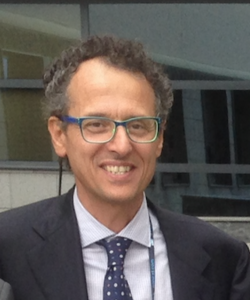
Biography:
Dr. Francesco Giuseppe Della Corte received his Laurea degree in Electronic Engineering from the University of Napoli, Naples, Italy, in 1988. He is currently a Full Professor of Electronics with the Department of Industrial Engineering and Information Technologies (DIETI) at the University of Naples Federico II, Italy. Prior to his current appointment, he served as the Coordinator of the Laurea Degree (BS) Program in Information Engineering at the Mediterranea University of Reggio Calabria from November 2018 to January 2022, where he was affiliated for a total of eight years.
Professor Della Corte’s current research interests include wide-bandgap semiconductor device modeling for high-temperature and high-power applications, silicon photonics, and wireless smart sensors. He is also a co-founder of HWA srl, a company based in Reggio di Calabria, Italy, where he has been actively involved since June 2014. He has held significant leadership roles in the Italian scientific community, serving as Vice President of the Italian Electronics Society (SIE – Società Italiana di Elettronica) from June 2021 to June 2024. Additionally, he is the Principal Investigator of the focused project “GrapHICS” under the RESTART Foundation, a role he has held since January 2023. The RESTART program (“RESearch and innovation on future Telecommunications systems and networks, to make Italy more smart”) is recognized as the most important public research and development program ever realized in Italy in the telecommunications sector.
Dr. Yacine Boulfrad

Biography:
Dr. Yacine Boulfrad is a Senior Data and Technology Analyst at Scatec ASA, based in Oslo, Norway. In this role, he applies his deep technical expertise in materials science, solar energy, and data analysis to support the company’s renewable energy projects. He holds a PhD in Materials Science from the Norwegian University of Science and Technology (NTNU), completed between 2008 and 2011.
Dr. Boulfrad also earned a Master’s degree in Solar Energy from the University of Perpignan Via Domitia (UPVD) in 2007–2008, and a Master’s degree in Materials Physics from the University of Rouen in 2006–2007. Prior to his current position at Scatec ASA, Dr. Boulfrad gained valuable experience in research and development across several prestigious institutions. He worked at Norwegian Crystals, and held academic affiliations as a researcher at Aalto University in Finland (2013–2015) and at NTNU (2011). His professional skill set encompasses R&D, materials science, solar energy, silicon technology, and engineering.
Dr. M. B. Senouci
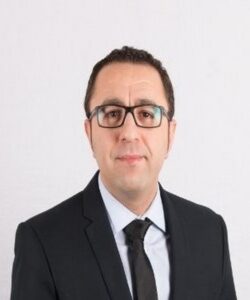
Biography:
Dr. M. Benaoumeur Senouci is an academic and researcher in computer engineering, specializing in embedded systems and cyber-physical systems. He earned his Master’s and Ph.D. degrees in computer engineering from the National Polytechnic Institute of Grenoble (INPG) in France, completing his doctorate in micro-nanoelectronics in 2008 at the TIMA Laboratory. His career has included research and academic positions across Europe and Asia. He has worked as a research fellow at the University of Twente in the Netherlands and in several French research laboratories, including CEA-LAMIH, LE2I at the University of Burgundy, and ELIAUS at the University of Perpignan. He has also been an Invited Professor at Kyungpook National University in South Korea.
His academic appointments have included roles as an Associate Professor at the Graduate Engineering School ECE-Paris and as a Professor of Computer Science and Electronics associated with the LACSC laboratory in Paris. More recently, he has been affiliated as an Associate Professor with the Centre for Industrial Mechanics (CIM) at the University of Southern Denmark (SDU).
His main research interests are centered on the design of smart and embedded systems. This includes Cyber-Physical Systems (CPS), smart embedded systems design, and hardware/software architectures, often utilizing multi-CPU/FPGA platforms for prototyping. His work finds applications in areas such as autonomous vehicles, where he has explored sensor fusion for object detection, and in healthcare, with projects on blood supply chain management and the development of smart camera systems for fall detection. His more recent research also delves into machine learning, sentiment analysis, and cybersecurity for cyber-physical systems.